
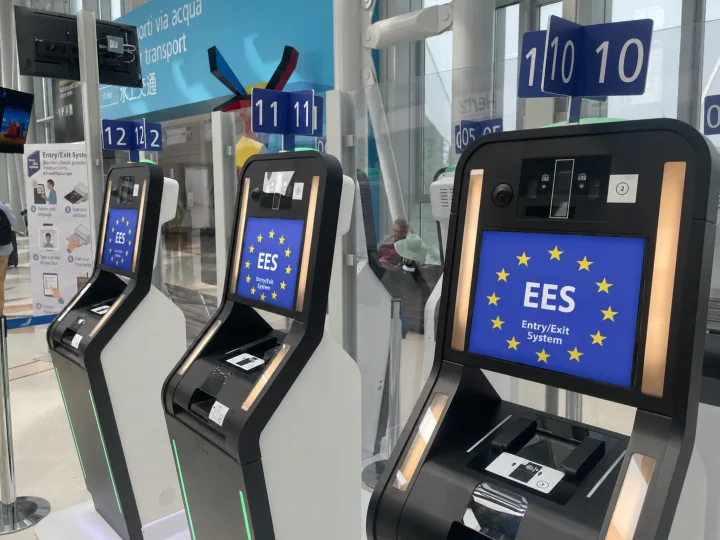
The European Commission said Monday that national border authorities can temporarily suspend the collection of biometric data under the EU's new Entry/Exit System (EES) when border crossing points face exceptionally high pressure, as concerns grow over travel delays during the peak summer season.
Speaking at the EU Commission's midday press briefing, spokesperson Markus Lammert said the EES includes built-in flexibility to help manage congestion during its first summer of operation.
"When there are situations of exceptionally high pressure on a certain border crossing point, there is the possibility to suspend temporarily the registration of the biometrics," Lammert said.
He stressed that the measure applies only to the collection of facial images and fingerprints required during a traveler's first entry into the system, and does not amount to suspending border checks.
"Suspension of the biometrics doesn't need suspension of the system, there will still always have to be a check. It's just that this extra registration of the facial and of the fingerprint data can be suspended," he explained.
Lammert said the decision rests with national border authorities, which can activate the measure on an ad hoc basis when waiting times become excessive.
The EES, the EU's new digital border management system for non-EU nationals, replaces passport stamping with electronic registration of travelers' entry and exit data, including biometric information collected during their first registration.
Lammert said the EU Commission has been working closely with member states to minimize disruption and held a technical meeting with the aviation industry ahead of the summer travel season.
He said many of the operational challenges reported at some airports are linked to pre-existing issues, including staffing shortages, infrastructure constraints, and limited space, rather than the EES itself.
He added that the EU border agency Frontex stands ready to deploy additional staff to the busiest airports and support the rollout of a pre-registration application across member states.
The commission also defended the new system's security benefits, with Lammert saying it has already helped identify more than 1,000 people presenting a security risk by using biometric checks to verify identities.







.jpg.jpeg)