
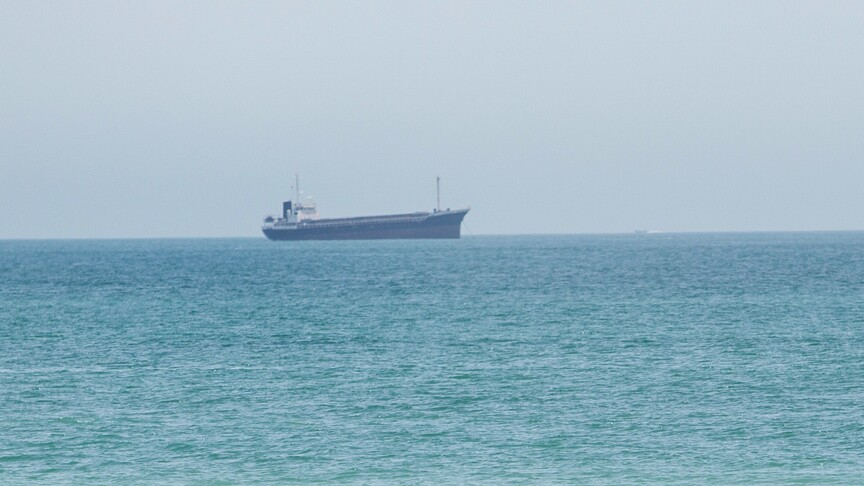
Iranian Deputy Foreign Minister Kazem Gharibabadi said Friday that safe passage through the Strait of Hormuz cannot be guaranteed under "ambiguous arrangements" or parallel routes devised outside Tehran's considerations as a coastal state.
Any credible framework for maritime transit through the strategic waterway must be based on coordination with Tehran and in line with Article 5 of the Islamabad memorandum of understanding with the US, Gharibabadi wrote on US social media company X.
"Safe passage in the Strait of Hormuz cannot be guaranteed with ambiguous arrangements, parallel routes, or decision-making outside Iran's considerations as a coastal state," he added.
He warned that failing to meet these conditions would result in the suspension of any designated parallel route.
Earlier, Iran's Foreign Ministry said in a statement that the Strait of Hormuz lies within the territorial waters of Iran and Oman, adding that shipping management in the waterway would be governed by Article 5 of the memorandum of understanding.
The ministry's statement was issued in response to a joint US-Gulf Cooperation Council (GCC) communique that called for reopening the Strait of Hormuz and stressed "free, unconditional, and unrestricted navigation" through the strategic waterway.
The US-GCC statement also rejected "any tolls, fees, or attempts to assert control" over the Strait of Hormuz.
The Islamabad Memorandum of Understanding between the US and Iran officially came into force on June 18 after both countries' presidents electronically signed it.





.jpg)
.jpg.jpeg)