
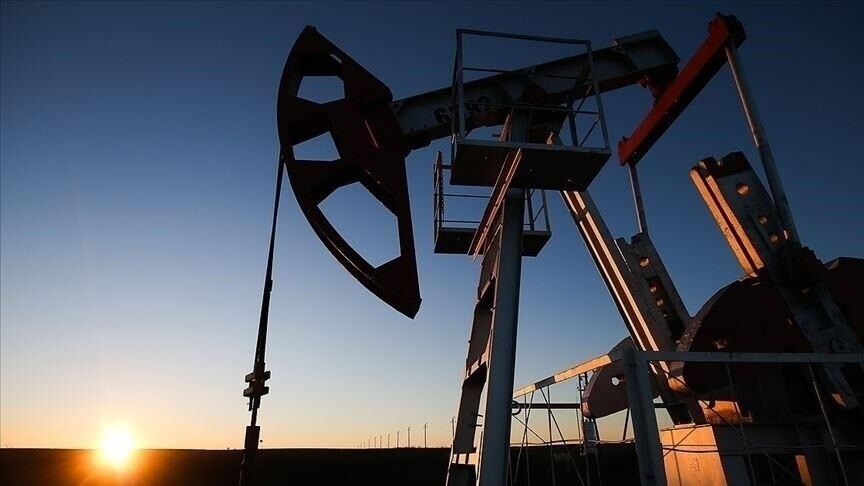
Oil prices rose around 5% on Monday as uncertainty persisted over a proposed US-Iran agreement to extend a ceasefire and reopen the Strait of Hormuz, while fresh regional tensions added to supply concerns.
International benchmark Brent crude futures climbed above $95.5 per barrel as of 1340GMT, rebounding from a six-week low, while US benchmark West Texas Intermediate (WTI) crude rose near $93 per barrel.
The gains came as Washington and Tehran continued exchanging messages over revisions to a draft deal, though there was little indication of a breakthrough. US President Donald Trump said overnight that “it will all work out well in the end,” even as military activity continued.
Market concerns deepened after Iran suspended indirect exchanges and text-sharing with the US through mediators in protest over continued Israeli attacks in Lebanon, Iran’s semi-official Tasnim news agency reported Monday.
Tasnim said Tehran will not resume indirect contacts until Israeli military operations in Gaza and Lebanon stop, adding that measures under consideration include the complete closure of the Strait of Hormuz and activation of other fronts, including the Bab al-Mandab Strait.
Meanwhile, US Central Command (CENTCOM) said Monday that US forces intercepted two Iranian ballistic missiles targeting American forces in Kuwait late Sunday.
CENTCOM said the missiles were “immediately defeated” and that no American personnel were harmed.
Elsewhere, Ukraine intensified attacks on Russian refineries, while Moscow banned jet fuel exports through November to prevent domestic shortages, adding pressure to global fuel markets.
Despite recent volatility, oil prices remain roughly 30% higher than before the conflict began in late February.




.jpg.jpeg)