
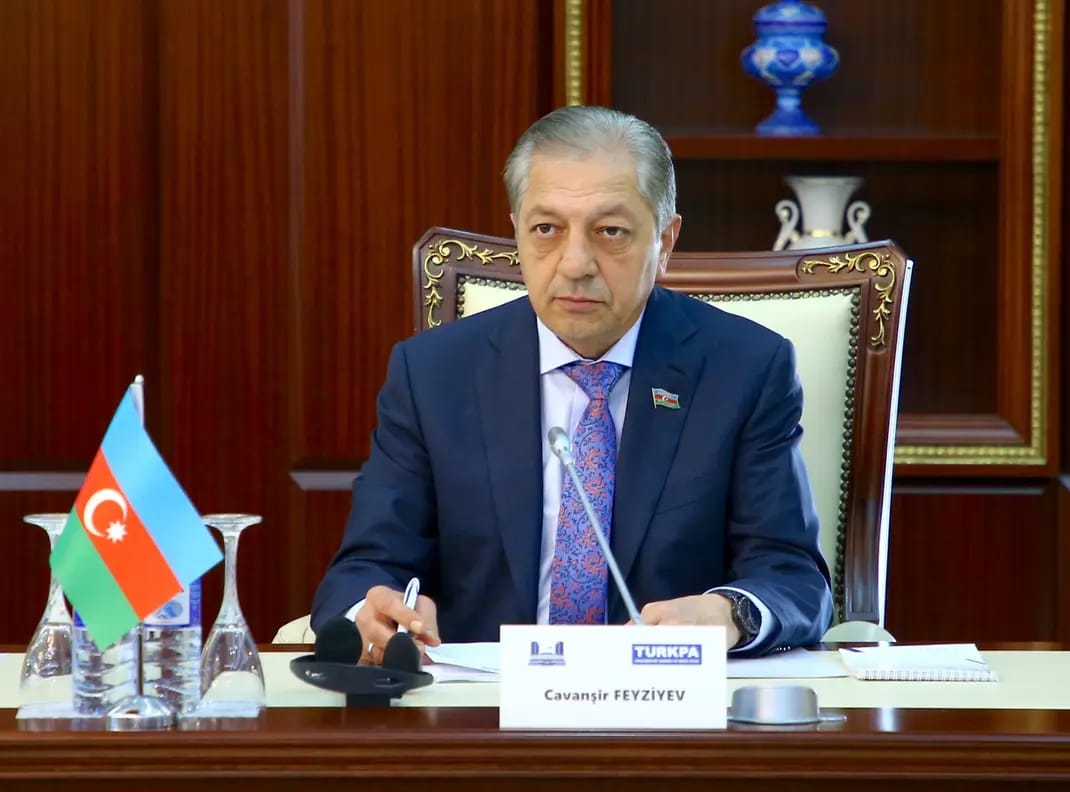
Member of the Parliament of Azerbaijan Dr. Javanshir Feyziyev issued an article regarding "World Literature - Comporativistics" scientific discussion, on "Literary- cultural relations between Azerbaijan - Great Britain".
Ednews presents the scientific research:
Javanshir Feyziyev
Baku, Azerbaijan
Member of the Milli Majlis of the Republic of Azerbaijan
Literary-cultural relations between Azerbaijan and Great Britain
The further development of political, economic, cultural and literary relations with the foreign countries over the period of independence played an important role in recognizing our country in many countries of the world. From this stand, the Azerbaijan-UK relationship can be called a “spiritual bridge” in strengthening mutual literary ties, cultural relations and ties between the two countries.
The study of relations between the Republic of Azerbaijan and the United Kingdom, which has occupied a special place among Western States throughout the period of independence, is important and relevant from the point of view of new ideas in the cultures integration process in the modern world and globalization in the conditions of multiculturalism.
Since independence, Azerbaijan has made significant strides aimed to developm and enrich cultural and literary relations, as in all areas. From this point of view, it is very important to look at the course of cultural and literary relations between Azerbaijan and the UK over the period of independence, to study and evaluate the interrelationship issues between them. Among the outstanding scientists of Azerbaijan who have great merits in comparative studies, literary relations and translation studies, Mirza Ibrahimov, Mamed Arif, Mamed Jafar, Isa Habibbeyli, Ismikhan Rahimov, Zeidullah Aghayev, Shahin Khalilov, Anwar Rza, Gazanfar Pashayev, Farida Valikhanova Arif Hajiyev, Vagif Arzumanly, Akif Bayramov, Gorkhmaz Guliyev, Jalil Naghiyev, Agil Hajiyev, Lyudmila Samadova, Ulfat Badalbeyli, Guler Abdullabekova, Leyli Aliyeva, Atami Mirzoev and others, have done valuable work.
In Azerbaijani literary criticism, many research works (books and monographs) are written describing the forms and methods of Azerbaijani-British literary relations, as well as scientific articles have been published and dissertations have been defended on various periods of these literary ties, since mutual translation and publication of literary, artistic and literary-scientific works is one of the most reliable means of strengthening and further enriching literary ties between the two countries. According to the general feeling of scientists and translators, translated literature in our time is one of the most important tools in the life of every nation and one of the most important factors in its development. On the other hand, translation is a means of communication between people, nations in general, and literature. Therefore, translation literature, which plays an important role in the integration of world cultures, is rapidly developing in all nations. It's hard not to agree with Professor G.Bayramov that “translation is an art; for his mastery, in addition to language skills as well as the subject of the text and knowledge of the world, you must have the talent of the translator, good writing and speaking skills, creative thinking. Like all over the world, Azerbaijan takes this art of great importance very seriously. Translations from the native language into other languages not only significantly expand the worldview of our people, their science and culture, literature and art, but also have a positive impact on the dissemination and use of progressive ideas as well as scientific achievements of other peoples.”
Back in the 1990, People's writer, Academician Mirza Ibrahimov wrote in the Preface to The Art of Translation collection of articles: “One of the true principles of literary translation is the issue of translation from the original. Of course, it's good to know the language of the original, it's a wonderful feature. Then, it is fine that the translator knows the language of the original and is creative, as well as has artistic qualities and figurative thinking. He has the ability to sense the difference between artistic word, artistic expression, and ordinary expression”.
The activities of Firudinbey Kocharli, Abbas Sahhat, Mikayil Rafili, Mammad Arif, Mirza Ibrahimov, Kamal Talibzade, Bakir Nabiyev and many others in this field deserve further study and research. However, in the current situation, it is necessary to approach any problems of literary relations, including literary translation from a new position, as well as from the position of assisting in the progress of independence, national identity, national literature.The correct scientific and theoretical interpretation of this eternal problem, using the opportunities provided by independence, depends on the position and theoretical training of our creative people and scientists.
While on the subject of about translations of Western literature into our language, Mirza Ibrahimov wrote: “... we have been translating world literature, especially European classics, into Russian for a long time, and currently, one of the factors indicating our common cultural advance is that our specialists translate the best scientific and literary monuments of Europe and a number of other Nations from the original”. It is of interest to note that these ideas, expressed by Academician M.Ibrahimov in the 90's, became the subject of a wider study and promotion of interesting ideas by modern researchers of the 2000’s Shahla Naghieva (Preserving the Reality in the Translation of Azerbaijani Poetry into English ; Baku, 1995), Kamalya Jafarova (Ensuring the Adequacy of the Shakespeare's Sonnets Translation into Azerbaijani; Baku, 2005), K.S.Huseynova (Some Important Factors of Direct English Translation in Azerbaijani Fiction; Baku, 2007).
Ulviyya Abbasova (Methods of Applying Epithets in English Literary Translation (based on the works of Chingiz Abdullayev); Baku, 2015).
The great writer and talented translator M.Ibrahimov, reiterating his own experience, repeatedly stressed the importance of finding adequate expression of some figurative expressions, pronouns and idioms that cannot be independently translated. In terms of the work Poetic Equivalents in Literary Translation (2010), in which the famous translator and poet, author of direct translations from the original language into Azerbaijani of folk and classical poetry of the English people and English-speaking peoples, as well as Shakespeare's sonnets, his tragedies Romeo and Juliet, Hamlet, Othello, The Tragedy of King Lear, Macbeth, Injured innosence poem Mustafa Sabir describes the literary ties between Great Britain and Azerbaijan, in particular in this regard, the work of Aytekin Gulieva “Anglicisms and Translation” (2008) is also of great interest caused by new ideas.
For historical reasons, translations of fundamental texts have had a significant impact on the development of world languages. Currently, the rich resources of the language itself prove the possibility of adequate translation. Academician Mamed Arif rightly believed that, “It is the richness of the Azerbaijani literary language that has allowed Azerbaijani translators to translate works of geniuses of Russian literature, preserving the beauty of the content and form of their works”. It stands to reason that this idea can also be attributed to English translations. This precise and well-founded note proves that the ability to demonstrate the capabilities of the translator depends to a large extent on the correct use of the language's capabilities. Numerous studies conducted in this area show that, sience the 19th century, our classics, enlightenment writers played a big role in the formation of the Azerbaijan school of literary translation, the formation of its best traditions, and developing national Interpretation and Translation Studies. However, literary translation always exists, has been, and will be in the future.
And the the prominent scholar-philologist Shamil Salmanov – expressed idea back in 1995 “At present, the Azerbaijani art of literary translation is entering a new, more important stage in its development, putting forward new tasks, and therefore there is now a great need for its study” sounds more relevant now. And today, we can definitely say that the words spoken at the time by Shamil Salmanov and sounded like a wish, have become a reality. New names and new translations have appeared in Azerbaijani translation. And a significant part of these translations and research works are related to Azerbaijani-British literary relations. In terms of the translation of prominent Azerbaijani writers over the period of independence, Academician Isa Habibbeyli said: “Translation of writers' works into Turkish, English, French, Greek, Italian, Spanish, Japanese and other European and world languages, as well as publication abroad recognize our country and Azerbaijani literature.
The publication of Anar's works in world languages, the staging of Elchin’s plays in London and America, as well as the publication of Vagif Samadoglu’s poems in English in the United States testify to the powerful success of our literature in recent years”
Scholars contend the basis of the original translation work is knowledge of English, books and textbooks on grammar, phonetics and lexicography, teaching aids, studies, dictionaries and lexicography of linguistics”.
From this point of view, the work done over the years in this area by prominent specialists and English teachers of Azerbaijan, including Zemfira Verdieva, Ismikhan Rahimov, Hajar Naghieva, Sadulla Babayev, Vahid Arabov, Rukhsara Gayibova, Minara Garayeva, Oruj Musayev, Tahir Abbasguliyev, Abbas Abbasov, Elton Hajiyev as well as others is worthy of great praise.
According to researchers, the study of a foreign language is the beginning of work on understanding and acquisition of language phenomena inherent in this language. The main and the key issue in this process is to acquire the skills and abilities to put into practice the grammatical rules of the language based on the social function of the language. In modern English, phrases and syntactic-grammatical relationships between words in a sentence are expressed by auxiliary verbs, phrases, articles, and other means. Since most of these analytical tools do not have direct opposition in the Azerbaijani language, it is really hard to express them in a proper way. The historical fact is that the language of every nation is its national treasure, and the struggle to preserve this wealth has been waged for centuries. According to the genealogical division, the Azerbaijani language is the part of the Turkic languages.
Since our country gained independence, our language has passed a long and difficult path of development. At present, the free people of Azerbaijan and the independent state of Azerbaijan establish mutual and equal political, economic, cultural ties and relations with near and far countries, West and East, North and South. The Azerbaijani-British cultural and literary bridge is of great value, in this regard. The translation of historical and literary works covering various topics into our native language is an obvious example of our achievements resulting from the serious work done to establish a spiritual bridge between the West and the Eastern world.
As a result of the development of the art of translation, the readers of Azerbaijan during those years got acquainted with the translated Western works, including “J.Salinger, J.Steinbeck, T.Wolf, S.Maugham, S.Sveyq, O.Wild, J.P.Sartr, A.Kristi, A.Conan Doyle, J.Simenon, D.Butsati, J.Baldwin, S.Anderson, as well as looked through dozens of other authors. Translation works of classical Azerbaijani poets have been published again, research works written in this field have been edited”.
In order to regulate and coordinate the work in the terminology in the Azerbaijani language, one of the most commendable is the creation of a terminology Commission under the Cabinet of Ministers, as well as Translation Center for centralized and targeted translation work in our country.
Research shows that William Shakespeare was the first and most widely researched and translated writer whose works have been translated into our language.
This is evident not only in literature of Azerbaijan, but also in many other literary works. Interest in the great English playwright has never faded in Azerbaijan, his works have been repeatedly translated into our language, and his work has been the subject of research.
When the first samples of European classics were translated into the Azerbaijani Turkic language, Ahmed Bek Aghayev, who always attached great importance to progressive Western values, did not conceal his satisfaction while said: "I expect more, much more from these translations – I expect a lot from what schools and newspapers will give!". At the initial stage, the works of the great English literary giants were translated into Azerbaijani only through the second language, Russian.
Speaking about such translations, Professor Q.Bayramov has justly noted that: “...when translating from the second, third, and other languages, the target text is gradually removed from the original, leaving no trace of the original's artistic character and author's line”.
A more accurate and close translation from the original can be seen from Shakespeare's 10th sonnet, translated by Sabir Mustafa, which is very popular:
For shame deny that thou bear'st love to any,
Who for thyself art so unprovident.
Grant, if thou wilt, thou art beloved of many,
But that thou none lovest is most evident:
For thou art so possessed with murderous hate,
That 'gainst thyself thou stick'st not to conspire,
Seeking that beauteous roof to ruinate
Which to repair should be thy chief desire.
O! change thy thought, that I may change my mind:
Shall hate be fairer lodged than gentle love?
Be, as thy presence is, gracious and kind,
Or to thyself at least kindhearted prove:
Make thee another self for love of me,
That beauty still may live in thine or thee.
Açıb ürəyini demirsən mənə:
Gəncliyin boş keçir, heyif deyilmi?
Çoxları məhəbbət bəsləyir sənə...
Aydındır, sevmirsən, demək, heç kimi.
Düşməntək məhv edib hər ötən anı
Nə üçün özünə ziyan edirsən?
Sənə miras qalmış gözəl binanı
Uçurub, dağıdıb, viran edirsən
Çiçəklər də solub gedir çəməndən,
Yerində açılır təzə qönçələr.
Həmişə haqqında düşünürəm mən:
Sənin gül hüsnün də solar bir səhər.
Zəmanə ömrünü biçib hər kəsin,
Nəsil qoy, yurdunda şamın solmasın
Comparison of verses demonstrates sufficient compatibility and level of translation both in the original and in the number of lines, as well as in the means of description used. Noting the superiority of the translations from the original, Sabir Mustafa also emphasizes degree of this literary process complexity: “Although we have a strong tendency to translate from the original, it is still underestimated as art, as an independent field of artistic creation. Translation is still considered as a minor light work. However, the pain of creativity and difficulties in the art of translation are no less than others.
The work of the great English playwright William Shakespeare has had an unprecedented impact on Azerbaijani culture, especially on our drama and theater.
Ismikhan Rahimov, one of the most prolific researchers of the English playwright in Azerbaijan, rightly noted that: "The authors who tried to translate shekspir have made a great contribution to the development of our translation art by finding ways to express Shakespeare's idea, rich language and expression in our language”. In the years of independence, the theme Shakespeare and Azerbaijan becomes one of the most significant pages of our literary relations. His Sonnets were published as a separate book in 1992; in 2004, by the Decree of H.E. Mr. Ilham Aliyev, President of the Republic of Azerbaijan On the Implementation of Mass Publications with Latin Graphics in the Azerbaijani Language, along with many works, by William Shakespeare’s two-volume Selected works were reissued. Today, separate works of the writer, especially sonnets, are regularly translated and published by new authors in almanacs, magazines, collections, magazines and newspapers.
In general, among the works of Shakespeare, his sonnets occupy a particular place. According to Professor Zeydulla Aghayev: “The sonnets of Shakespeare are well-known, effective and valuable from the sonets of the poet's predecessors, contemporaries and successors”
It may be no accident that that Shakespeare's sonnets have been translated into almost all languages. Azerbaijani Shakespeare writers and translators have also repeatedly referred to the Sonnets; each translator has contributed to this work.
In addition to translations, researchers have written a number of research papers over the years of independence on various aspects of the work of the English playwright W.Shakespeare. In this respect, Shakespeare's work has always taken pride of place.
Case in point are such works as Kamalya Jafarova’s Preserving the Adequacy of the Translation of William Shakespeare's Sonnets into Azerbaijani (2005), Shahla Naghieva's Soliloquy of Hamlet in Azerbaijani translations (2007), Nigar Isgandarova's Ahmed Javad as Shakespeare's translator (2007), Leyla Masimova’s Love in Fizuli and in Shakespeare (2009), The Problem of Conformity and Adequacy in the Translation of the Tragedy of Hamlet by W.Shakespeare into the Azerbaijani language by Esmiralda Rahimi (2011), as well as other works.
Among English writers, the poet George Gordon Byron, the most outstanding representative of world romanticism, translated into our language, along with the great playwright, writer, poet William Shakespeare. After Azerbaijan gained its independence, a new phase entered upon the study and translation of Byron's creativity. By the order of H.E. Ilham Aliyev, the President of the Republic of Azerbaijan On the Implementation of Mass Publications with Latin Graphics in the Azerbaijani Language, Byron's second edition Selected Works was published in 2006. This edition was reprinted on the basis of Byron's plays Gabil (Baku, 1934) and Eastern poems (Baku, 1959). The introductory part of Byron's poem The Prisoner of Chillon, as the part of this book, sounds like the original:
My hair is grey, but not with years,
Nor grew it white In a single night,
As men’s have grown from sudden fears:
My limbs are bowed, though not with toil,
But rusted with a vile repose,
For they have been a dungeon’s spoil,
And mine has been the fate of those.
And this is a translation of the same passage made by Anwar Rza:
Saçım qırov kimi ağdır necə də,
Amma yaşda deyil bu ağlıq, inan.
Nə də ağarmayıb bircə gecədə
Qəfil vahimədən, qəfil qorxudan.
Ağır zəhmət deyil belimi əyən...
Qəmli sükunətdə pas atmışam mən,
Məhbəs salıb bu hala məni, məhbəs!
From this small lyric fragment, you can see that the translator, fully aware of the main essence of the work, without going far beyond the scope of the text, distinctively expressed the poet's thoughts.
In general, encounter with Byron's works translations shows that, in general, the features of Byron's poetry in the English style have found adequate expression to a significant extent in the Azerbaijani language. The translation and study of works written in English into Azerbaijani was further expanded over the period of independence. Selected works by Somerset Moem (Baku, 2010) (translated by Yashar), Selected works by Oscar Wilde (Baku, 2013) (translated by Kamran Nazirli), 1984 by George Orwell (Baku, 2014) (translated by Vilayat Guliyev) were published in Azerbaijani, as well as Shahin Khalilli, Vilayat Quliyev, Gazanfar Pashayev and other authors' research works have been published. The role of largescale studies of the general real picture of literary studies over the period of independence of the Republic of Azerbaijan is undeniable in the development of Azerbaijani-British literary relations.
Thus, for several centuries in Azerbaijan, our writers, poets, intellectuals, translators have done a great and multifaceted work in the field of translating and studying samples of British literature into the Azerbaijani language, played a big role in the development and enrichment of Azerbaijani-British literary relations.
.jpg.jpeg)